Marine Series
HydroSave: Advanced Fuel Efficiency Increase System for Marine Engines & Cutting-Edge Fuel Reduction and Emissions Reduction Technology
GSF Technologies specializes in optimizing vessel operational costs through innovative technologies and advanced hydrogen generation solutions. Our mission is clear; significantly reduce fuel usage, lower engine oil consumption, and minimize exhaust emissions.
- How HydroSave Marine Works
How it Works
Improving fuel efficiency requires a sophisticated approach and numerous options are available ranging from fuel additives and catalyst injections to oil additives and hull coatings. But with escalating fuel prices and mounting environmental concerns, the most cost effective solution is now clear: enhancing combustion with hydrogen.
Fuel Efficiency Improvement

Economical, Clean & Green Operation
- HYDROSAVE MARINE SERIES
Information
Why Choose HydroSave Marine Series?
Implementing GSF Technologies’ HydroSave systems positions your business as an environmental leader, providing tangible evidence of your commitment to sustainability. This is not just about reducing operational costs. It’s “marketing gold,” distinguishing your fleet as environmentally responsible, future-ready, and competitive.
Key Benefits of HydroSAVE Marine Series
- Enhanced Fuel Combustion: Cleaner, more complete combustion.
- Significantly Improved Fuel Efficiency: Proven fuel savings between 1% and 4% depending on fuel, engine operation hours and current SFCO.
- Lower Exhaust Emissions: Drastically reduced CO, HC, and PM particulate emissions.
- Reduced Engine Soot: Cleaner lubricating oil, extending engine life.
- Smooter Engine Operation: Reduced vibration and quieter operation.
- Reduced Maintenance Costs: Fewer repairs and longer maintenance intervals.
- Increased Environmental Responsibility: Strengthened sustainability credentials
HydroSave Technical Advantages
- Premium Hydrogen Quality: Optimal combustion performance
- Efficient Hydrogen Production: Low power consumption, high hydrogen yield.
- Robust Electrolysis Design: Guaranteed leak-free, reliable performance.
- Fleet-Wide Analytics: Comprehensive tracking of fuel savings and emissions (optional).
- Flexible Production Adjustment: simple hydrogen output control
- Quick Return on Investment: Quick payback, usually < less than 12 months by fuel savings and reduced carbon offsets
- Significant Carbon Emissions Reduction: Achieve environmental mandates on time.
- Competitive “Green Vessel” Advantage: Stand out in a sustainability-driven market.
- Two Year Limited Warranty: Reliable operation with peace of mind
Operational Safety and Reliability
- Residual hydrogen is rapidly consumed post-shutdown, ensuring operational safety.
- Polyester-reinforced PVC hoses (rated 275–350 psi, FDA Specification CFR21 170–199) guarantee safe circulation of hydrogen gas and electrolyte.
- Systems housed in robust, corrosion-resistant enclosures.
- Designed for minimal maintenance and maximum simplicity of operation.
- Innovative water/gas collector eliminates the need for traditional air bubble units, enhancing convenience and reliability.
Installation and Technical Specifications
- 6 litres of hydrogen per minute per 500 kW engine output.
- Example: A 1 MW diesel engine requires 12 liters/minute.
- HydroSave Marine Series I for a 1 MW engine includes:
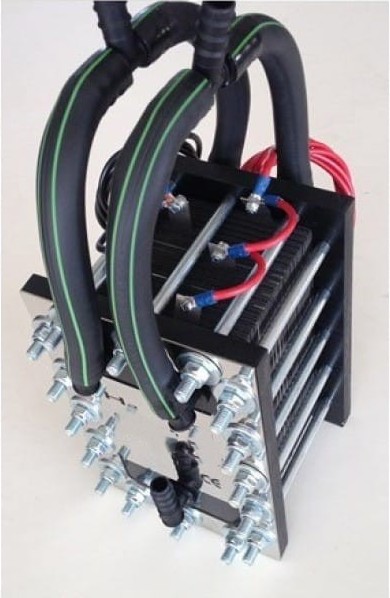
- Two Hydrogen production generators
- Advanced electronic control units
- Cooling fans (optional)
- Reserve and collector tanks
- Effective gas dryers
Electrical Requirements:
- 12 V DC systems: Maximum 60 amps
- 24 V DC systems: Maximum 30 amps
Resource Consumption:
- 30 grams distilled water per liter of hydrogen generated per hour
- Typical usage: approximately 80 liters distilled water per 24 operating hours at 6 liters of hydrogen/MW for a 9MW continuous operation
- Typical KOH usage: 2-3 Kg/ month of operation
- HYDROSAVE MARINE SERIES
Why HydroSave
REDUCE OPERATING COSTS AND INCREASE EFFICIENCY WITH A SIMPLE ADDITION
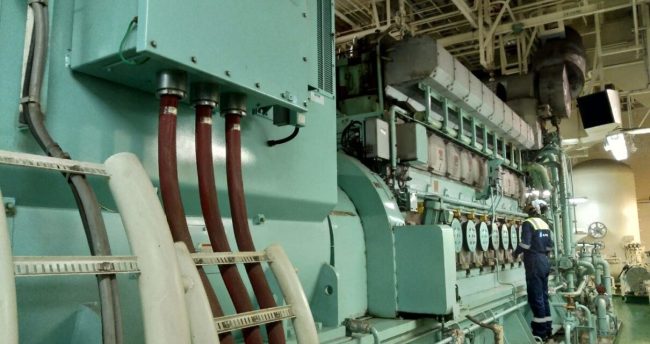
HydroSave Marine Series by GSF Technologies offers shipowners/operators a simple, safe, and quick payback solution to reduce fuel consumption and emissions on existing marine engines. The system is particularly effective on older vessels, where combustion efficiency has typically deteriorated.
How It Works
HydroSave uses onboard electrolysis hydrogen generators to generate pure hydrogen, which is then fed into the engine’s air intake. This improves combustion efficiency, resulting in almost complete fuel burn, cleaner emissions, and direct-immediate operating cost savings.
Proven OPEX Savings
- Fuel savings: 1%–4%, depending on fuel type and total engine operating hours.
- Payback period: Usually < less than 12 months at current fuel prices for the majority of vessels.
- Operational impact: None on the primary engine setup; installs as an independent retrofit.
Why It Matters for Shipowners
- Fuel remains one of the highest OPEX contributors in vessel operations. Every percentage point of saving translates into immediate cost reductions.
- HydroSave system is ideally suited for any vessel—especially older ones—delivering validated and measurable return on investment without CAPEX-heavy upgrades.
- Particularly relevant where owners operate their own vessels and bear the fuel cost directly, or for cost-conscious / environmentally conscious charterers.
Additional Benefits
- Smoother engine performance and reduced wear
- Lower maintenance requirements and reduced engine lubricant oil consumption
- Significant reductions in CO, HC, and particulate emissions
- Lower scrubber installation costs due to downsizing by at least 30%
- Fully modular and safe: no hydrogen storage required
Installation
- Modular and compact; installed inside or outside the engine room with no downtime
- No interference with engine control systems
- Includes full monitoring and production adjustment capability
Effect of hydrogen enrichment
Effect of hydrogen enrichment (12 L/min per MW) on emissions of a 30 MW marine engine. The values below show typical changes in key pollutants/gases upon addition of ~360 L/min H₂.
|
Gas / Pollutant
|
Baseline (without H₂)
|
With 180 L/min H₂
|
Change
|
Reason
|
|---|---|---|---|---|
|
CO2 (Carbon Dioxide)
|
~6,5% vol
|
~5,9–6,3% vol
|
Moderate Decrease
|
Hydrogen combusts almost fully the fuel, reducing CO2 for same shaft power.
|
|
CO (Carbon Monoxide)
|
CO (Carbon Monoxide)
|
0,4–0,8 g/kWh
|
Strong Decrease
|
Hydrogen enables near- complete combustion CO to CO2.
|
|
NOx (Nitrogen Oxides)
|
7–12 g/kWh
|
9–12 g/kWh
|
Noticeable Increase
|
Higher peak temperatures from hydrogen combustion.
|
|
HC (Unburned Hydrocarbons)
|
0,2–0,8 g/kWh
|
0,05–0,3 g/kWh
|
Strong Decrease
|
Efficient oxidation reduces unburned fuel.
|
|
O₂ (Oxygen)
|
10–13,5% vol
|
8–11% vol
|
Slight Decrease
|
More oxygen consumed in hydrogen-enhanced combustion.
|
|
PM (Particulate Matter)
|
0,35 g/kWh
|
0,1–0,25 g/kWh
|
Strong Decrease
|
Hydrogen combustion sharply reduces soot.
|
Note: Values are indicative and depend on engine setup, loads, fuel and NOx control strategies.
- HYDROSAVE MARINE SERIES
Case Study – Summary
This case study presents a simulation of hydrogen-enhanced fuel combustion on a large ocean-going vessel equipped with a MAN 6S80MC-C7 main engine and auxiliary generators. Using real operational data and conservative assumptions, the analysis demonstrates that a HydroSave retrofit can deliver validated fuel and emissions savings with very low CAPEX and extremely short payback.
Key outcomes:
- Fuel savings: ~3.7% annually, equivalent to USD 291,000 per year (based on median fuel prices over the past 24 months).
- Emissions reduction: ~1,700 mt CO₂ per year, supporting compliance with IMO NZF frameworks.
- Operational scope: ~14,800 mt annual fuel consumption across main and auxiliary engines.
- Payback: Achievable within < less than one year at current fuel prices.
- System design: Modular, compact, no hydrogen storage, no integration into existing engine software or fuel lines.
This assessment positions the technology as a practical first step toward efficiency and decarbonisation, delivering immediate OPEX savings alongside environmental benefits that will gain increasing value as regulatory implementation intensifies.
Vessel Operational Profile
Annual Fuel Consumption Cost
Simulation Results (Conservative fuel consumption reduction scenarios)
Inputs:
- Annual total fuel consumption: 14,812 mt (including AEs).
- Projected fuel savings: ~548 mt (~3.7%).
- Annual CO₂ emissions: 46,094 mt.
- Projected CO₂ reduction: ~1,700 mt (~3.7%).
Note: Savings from ETS/carbon offset purchases are not included in payback calculations.
HydroSave System Configuration
- Hydrogen generators: 2 per operational MW.
- Total generators required: 18.
- Cabling / electrical board.
- TracPipe pipelines and manifolds (≤ 50 m).
- Hydrogen detector with automatic wireless cut-off system.
Investment Costs
Installation
- In Greek ports: €5,500.
- Outside Greece: As above, plus travel and equipment freight expenses for two technicians.
- Shipping costs to the installation site are not included.
Payment Terms
- 50% upon purchase order.
- 30% upon completion of HydroSave production.
- 20% upon commissioning.
Strategic Advantages
- Low-CAPEX retrofit. Compact, modular and safe system with no onboard hydrogen storage.
- Short payback period. The model assumes only 3.7% fuel savings, while higher savings are often achievable in practice.
- Emissions reduction. Approximately 1,700 mt CO₂ less per year, positioning shipowners ahead of tightening decarbonisation requirements (IMO NZF). The monetary value of carbon offsets is not included in the analysis and therefore not reflected in the payback calculation.
- Proven, scalable technology. Successfully installed and operated on multiple vessels, with the option to replicate across an entire fleet.
|
Item
|
Details
|
|---|---|
|
Main engine
|
MAN 6S80MC‑C7
|
|
Original MCR
|
22,700 kW → derated to 17,769 kW (78.3%)
|
|
Typical operational power
|
~9 MW continuous
|
|
Operation at sea
|
~85% of the year
|
|
Year Built
|
2010
|
|
Total operating hours
|
~96.821
|
|
Auxiliary engines
|
3 × 5DK-20, 745 kW each
|
|
AE utilisation
|
2 online, ~65% uptime, ~315 kW avg. load
|
|
Category
|
Value / Cost
|
|---|---|
|
Average 2024 fuel prices
|
HFO: USD 515/mt · VLSFO: USD 626/mt
|
|
Main engine fuel cost
|
USD 7.04 million
|
|
Auxiliary engines fuel cost
|
USD 0.83 million
|
|
Total fuel cost
|
USD 7.87 million (excluding boiler fuel)
|
|
ITEM
|
COST
|
|---|---|
|
Hydrogen Generators
|
TBD
|
|
Cabling / Electrical Board
|
TBD
|
|
TracPipe Piping & Manifolds
|
TBD
|
|
Detector / Automatic Cut-off Switch
|
TBD
|
|
Total Equipment Cost
|
TBD
|
- HYDROSAVE MARINE SERIES
System Operation & Safety Overview
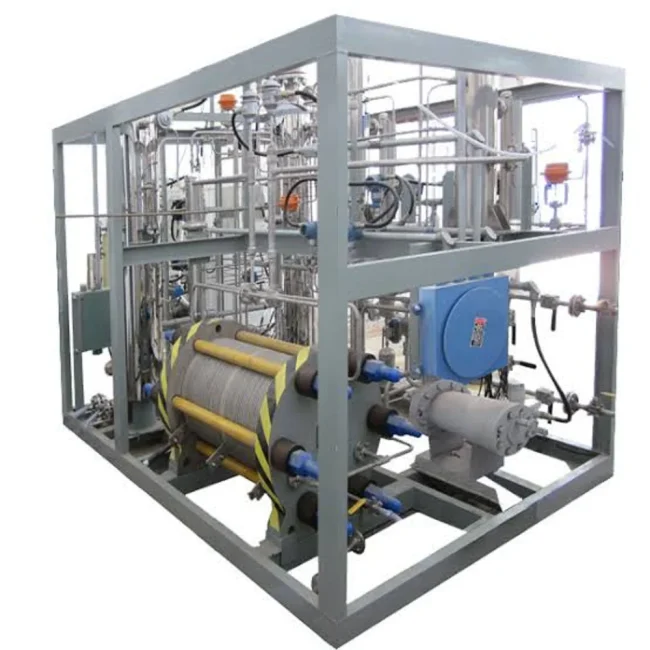
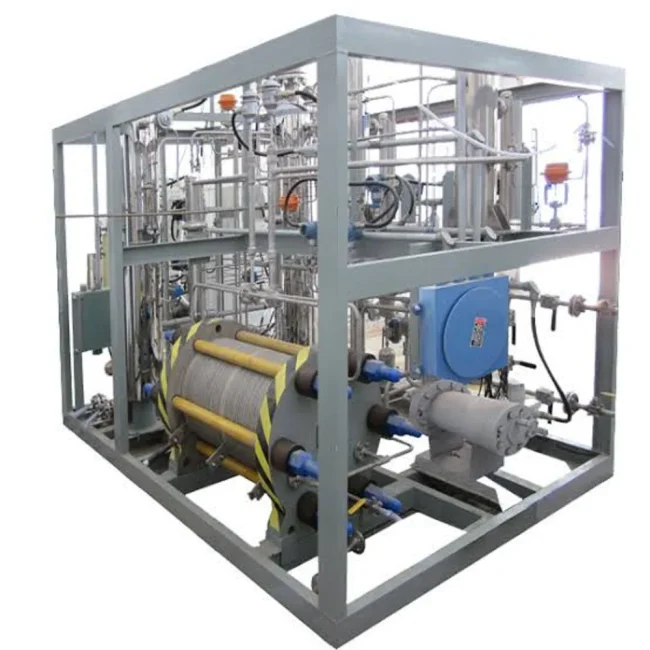
The GSF Technologies HydroSave Marine Series is a modular water electrolysis system that produces pure hydrogen on demand. The hydrogen is supplied directly to the engine air intake.
HydroSave is designed to improve combustion efficiency and reduce fuel consumption in marine engines, with absolute priority on safety, simplicity of design, and minimal interference with onboard systems.
System Overview
- Electrolysis System: Pure hydrogen is produced from distilled water using KOH as electrolyte. There is no onboard hydrogen storage, eliminating risks associated with storage and high pressure.
- Direct Utilization: Hydrogen is injected directly into the engine’s turbo / air intake through a dedicated gas line, improving combustion quality and increasing thermal efficiency.
Core Safety Features
- Hydrogen Detector: Installed on the ceiling above the hydrogen generators. If trace hydrogen levels are detected (1 ppm), the system automatically and instantaneously shuts down all generators, ensuring immediate cessation of hydrogen production in the unlikely event of a leak.
- No Storage Tanks: Hydrogen is produced only on demand, eliminating any risk related to accumulation or storage.
- Pressure Relief Valve: Protects the system from overpressure conditions.
- Flow Control Valve: Enables precise regulation of hydrogen flow to the intake system.
- Dryer / Purifier: Ensures high hydrogen purity and zero water vapor content prior to engine air intake.
Installation Footprint
- Compact installation footprint inside or outside the engine room.
- Modular design adaptable to different engine sizes (standardized in 500 kW engine power modules).
- Fully independent from main engine systems — no software integration or third-party controls required.
Process Flow Summary
- Water supply → Hydrogen Generator (with KOH electrolyte).
- H₂ passes through: Dryer → Pressure Relief Valve → Flow Control Valve.
- Hydrogen detector monitors potential hydrogen presence above the generators.
- If safe: H₂ flows to the hydrogen manifold and into the turbo / engine air intake.
- If hydrogen is detected: Immediate cutoff of power supply to all generators.
The system has already been installed on dozens of commercial vessels and power-generating diesel engines. With automatic safety cutoffs, pressure control, and no onboard gas storage, HydroSave provides shipowners with a low-risk, high-efficiency solution for fuel consumption and emissions reduction.

Contact
We are always here to answer any questions or concerns you may have!
HydroSave
-
Teemu Lehtinen
Head of Marine Sales - teemu@gsfone.tech
- +30 69 4329 9538
- Kavalieratou 7, 14564 Kifissia, Greece

